
The short version: a shipping container in ocean service is usually retired after 10 to 15 years. Sitting still on land, out of salt spray and off wet ground, the same box will commonly give 25 years or more — and there are containers well past that still doing useful work. The number is not fixed by the steel. It is decided almost entirely by what you set it on and whether water can sit anywhere on it.
That is the honest answer, and it is worth understanding why, because the difference between a container that lasts fifteen years and one that lasts forty is a few hundred dollars of gravel and about an hour a year with a wire brush.
Why Containers Get Retired From Shipping
A container leaves the ocean fleet long before it stops being useful. Shipping lines retire units on economics and certification, not on failure. After roughly a decade of loading, stacking nine high, and constant salt exposure, a box accumulates enough dents, door wear and corrosion that recertifying it costs more than replacing it in the fleet.
The certification piece matters here. Under the international Convention for Safe Containers, a container used in ocean transport carries a CSC plate and must be re-examined periodically to stay valid for cargo carriage. When a line decides a unit is no longer worth presenting for examination, it goes to the domestic market. That decision says the unit is no longer economic as freight equipment. It does not say the unit is worn out.
This is why a used container is such good value on land. You are buying a structure engineered to survive a decade of the harshest environment steel is asked to work in, at the point its original owner stopped wanting to recertify it.
What Actually Kills a Container
Almost every container that fails on land fails from the bottom up, and almost always for the same reason.
Standing water at the bottom rail
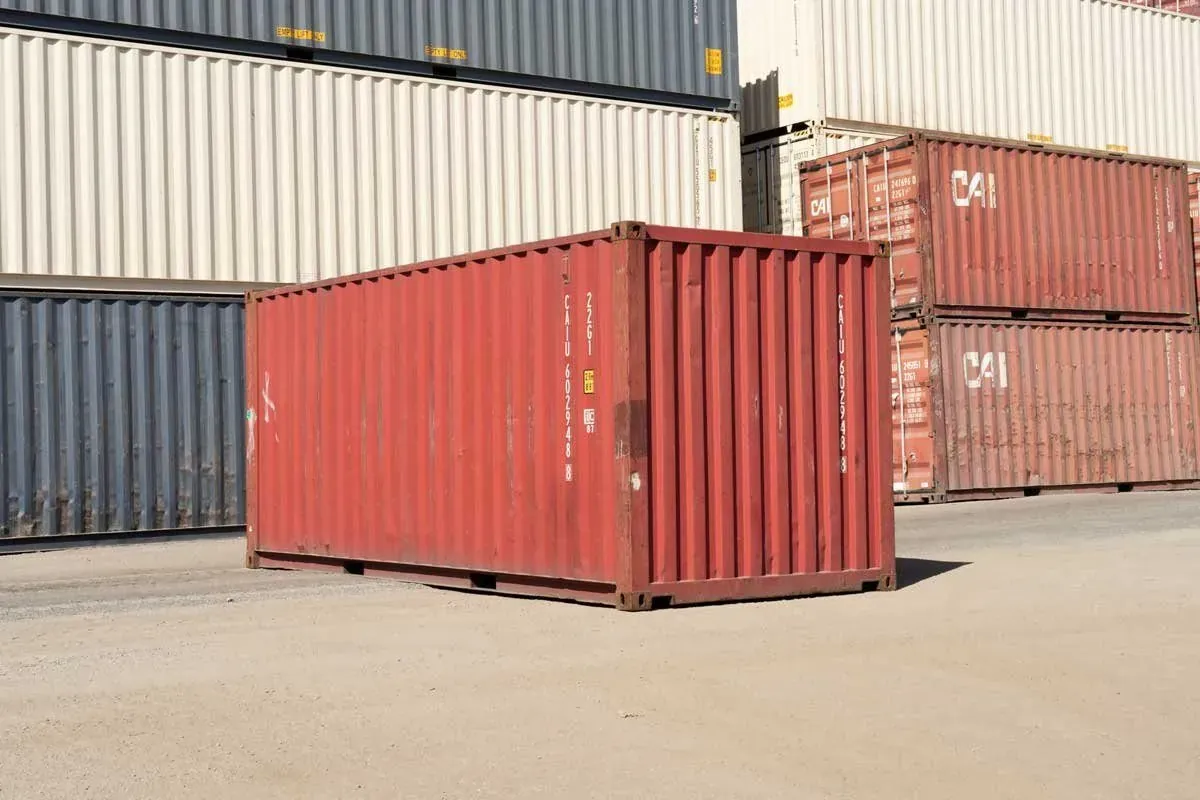
The single biggest killer. The bottom side rail and the cross members under the floor are the structural members carrying your load, and they are the ones that sit closest to the ground. Set a container directly on soil or grass and you create a permanently damp interface right along that rail. Water wicks up, air cannot circulate, and the steel corrodes from the outside in at a rate that has nothing to do with how good the container was when it arrived.
Set the same container on four corner pads with air underneath and a slight fall for drainage, and the bottom rail stays dry and lasts decades. This is the whole game. Our foundation and ground prep guide covers how to do it properly.
Roof ponding
A container roof is a shallow corrugated panel, not a pitched surface. It sheds water reasonably well when level and true, but a dented roof panel holds a puddle, and a puddle that never dries is a rust site with a schedule. Leaves and pine needles make it worse by holding moisture against the steel. If you can safely check the roof once a year, clear it.
Damaged paint that stays damaged
Container steel is weathering steel — COR-TEN and its equivalents — alloyed so that surface oxidation forms a tight, adherent layer that slows further corrosion rather than flaking away like ordinary mild steel rust. That is genuinely protective, and it is why a container can look scruffy for years without getting structurally worse.
What weathering steel does not do is survive indefinite wetting. The protective patina depends on wet-dry cycling. Steel that stays wet — under a tarp, against soil, inside a permanent puddle — corrodes conventionally and keeps going. A scrape through to bare metal in a spot that drains and dries is cosmetic. The same scrape somewhere that stays damp is the start of a hole.
The floor, from inside
Container floors are thick marine-grade plywood on steel cross members, treated against rot and insects. They are tougher than they look and routinely take forklift traffic. What they do not tolerate is a persistent leak overhead, or standing water inside from condensation that never gets ventilated. A floor that stays wet delaminates and softens, and by the time you notice, the cross members underneath have usually been wet for just as long.
Realistic Service Life by Grade
| Starting grade | Age at purchase | Reasonable expectation on land |
|---|---|---|
| New (one-trip) | 1–2 years | Decades, on a dry base. You are starting with factory paint, an unmarked floor and unperished gaskets. |
| Refurbished | Varies | Corrosion has been treated and the shell resprayed. Life depends on how thoroughly that was done and, again, on the base. |
| Used (cargo worthy) | ~5–15 years | Structurally sound with years of service left. Expect to touch up rust spots occasionally; expect the bottom rail to be the part that decides the outcome. |
| As-is / storage class | Older | Sold in the condition described. The cheapest steel per square foot available, and the grade where inspecting before you commit matters most. |
These are expectations, not guarantees, and we do not offer a lifespan warranty on used equipment — nobody credibly can, because the outcome is dominated by siting and maintenance after delivery rather than by condition at sale.
The Maintenance That Actually Matters
Container upkeep is close to nothing, but the little that exists is worth doing.
- Keep the corners off the dirt. If you do one thing, do this one. Concrete pads, railroad ties, or compacted gravel under the four corner castings.
- Give it a fall. A slight slope so water runs off the roof and away from the base rather than pooling under it.
- Touch up bare metal. Wire-brush any scrape that has gone through to shiny steel, and paint it. A rattle can of enamel once a year is the entire maintenance budget.
- Clear the roof. Leaves, needles and standing water off the top.
- Keep the doors working. Grease the cam gear and hinges. Seized door hardware is the most common annoyance on an older unit, and it is entirely preventable.
- Ventilate. Most “my container leaks” reports are condensation. See whether containers are waterproof for the distinction and the fix.
Does a Container Hold Its Value?
Better than almost anything else you can put on a yard. A container is a commodity asset with an active secondary market: it has a floor price set by the steel in it, and a used unit that has been kept dry and painted resells to the next buyer readily. That is worth weighing against renting, where the money leaves permanently — we work the arithmetic through in buying versus renting a shipping container.
Frequently Asked Questions
How long does a shipping container last?
Roughly 10 to 15 years in ocean service, and commonly 25 years or more sitting on land, provided it is set on a dry base with its corners clear of standing water. Containers well past that age are still in everyday use. The base it sits on affects the outcome more than the grade you bought.
Do shipping containers rust?
Yes, but not the way ordinary steel does. Containers are built from weathering steel, which forms a tight surface patina that slows further corrosion instead of flaking. Surface rust on a container is normal and cosmetic. Structural rust happens where water sits and never dries, which is almost always the bottom rail on a container placed directly on soil.
What is the most common cause of container failure?
Corrosion of the bottom side rail and the under-floor cross members, caused by placing the container directly on ground that stays damp. Air underneath and drainage away from the base prevents nearly all of it.
How long does the wooden floor last?
Marine-grade plywood flooring is treated and durable, and routinely survives forklift traffic for many years. It fails when it stays wet, whether from a roof leak or from unventilated condensation. Keep the inside dry and the floor generally outlasts the owner's interest in the container.
Does a used container come with a valid CSC plate?
Not necessarily, and it does not need one for storage on land. A CSC plate and its periodic examination relate to carrying cargo in international transport. If a unit is being used as static storage, the plate is irrelevant to how long it will last. If you specifically need a unit for ocean carriage, check the listing and ask before ordering.
Is it worth buying a cheaper, older container?
Often, yes — if you inspect it and site it well. The cheapest storage-class steel on a good gravel base will outlast a one-trip container dumped on wet clay. Spend the difference on the ground rather than the grade unless appearance matters or you plan to modify the unit. Our inspection guide covers what to look at.