
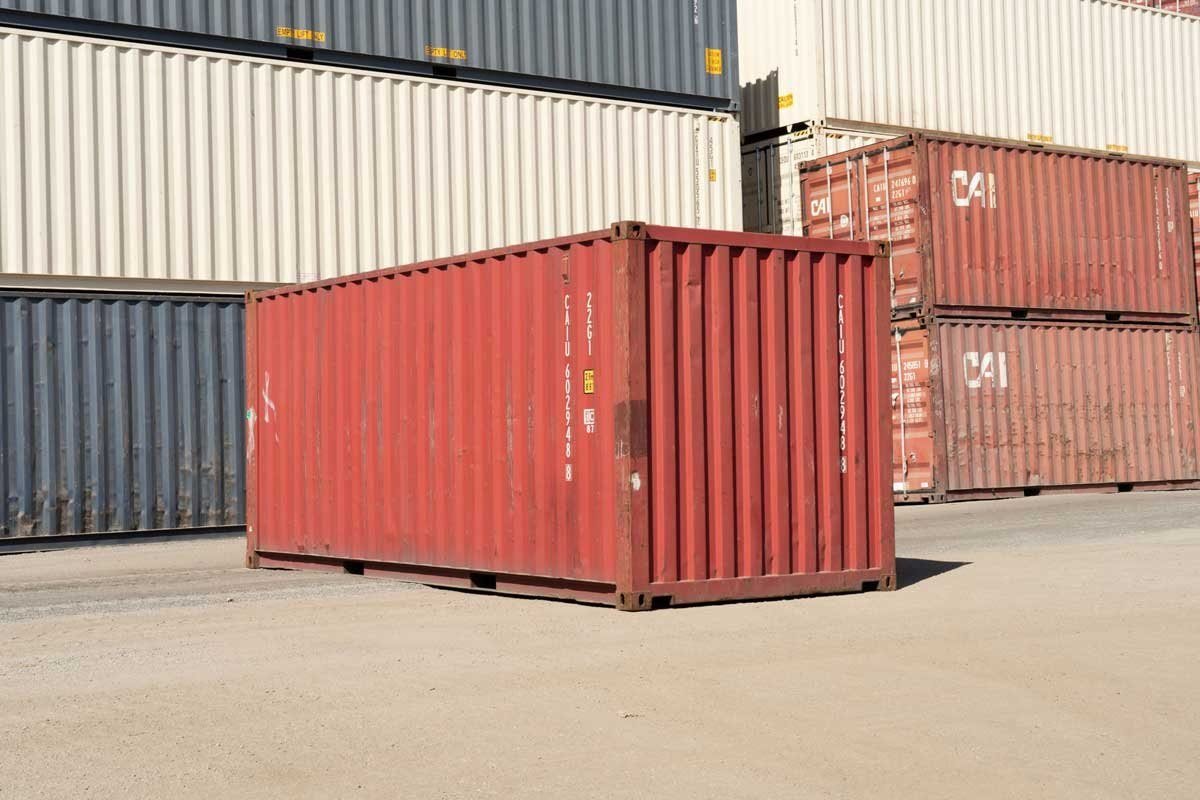
A shipping container doesn't rest on its floor — it carries its entire load on the four corner castings. That single fact drives every foundation decision. Get the corners level and well drained and the container will sit happily for decades. Get it wrong and the frame racks, the doors stop closing, and rust starts at the bottom rail.
Why the Foundation Matters
- Doors: a container that isn't level twists slightly, and twisted doors bind or won't latch. This is the single most common complaint from a badly sited container, and the most expensive to fix.
- Rust: a container sitting directly on soil or grass traps moisture against the underside and the bottom rail, which is exactly where corrosion does structural damage.
- Settlement: soft or unprepared ground lets one corner sink over a wet season, undoing a level set-up.
- Access underneath: a few inches of clearance lets air move under the floor and lets you inspect the cross-members.
Foundation Options Compared
| Option | Relative cost | Effort | Best for | Frost-prone sites? |
|---|---|---|---|---|
| Compacted gravel pad | Low | Half a day with a plate compactor | Most storage installations | Adequate with good drainage |
| Gravel plus solid concrete blocks | Low–moderate | Add a couple of hours | The default recommendation | Adequate with good drainage |
| Concrete piers | Moderate | Excavation and pour | Permanent placement, poor soil | Yes — take footings below frost line |
| Strip footings | Moderate–high | Excavation and pour | Long units, soft ground | Yes |
| Full concrete slab | High | Significant | Occupied buildings, workshops | Yes, if designed for it |
| Railroad ties / timber sleepers | Very low | Minimal | Temporary placement | No — timber rots and moves |
Compacted gravel pad
The most common choice, and for most sites the best value. Strip the topsoil, lay and compact several inches of crushed stone, and level it. Gravel drains freely, spreads load, and is far cheaper than concrete. Angular crushed stone compacts and locks; rounded pea gravel does not, so specify crushed. Make the pad at least a foot wider than the container on each side so runoff from the roof lands on stone rather than washing out the edge.
Concrete blocks under the corners
Solid concrete blocks — not hollow decorative ones — set under each corner casting, usually on top of a gravel base. Inexpensive, easy to shim level, and keeps the steel well clear of the ground. For a 40ft unit add intermediate supports along the length rather than relying on the four corners alone over soft ground; a common arrangement is blocks at the corners plus a pair at roughly the third points.
Concrete piers or strip footings
Poured piers under the corners, or two continuous strips running the length of the container. This is the choice for permanent installations, poor soil, or anywhere frost heave is a factor — footings should reach below the local frost line so winter doesn't lift a corner. Frost depth varies enormously across the country and is set by local code; ask your building department for the figure that applies to your address rather than guessing.
Full concrete slab
The most expensive option and rarely necessary for storage. It earns its cost when the container is a permanent building — an office, a workshop, a habitable conversion — where you want a sealed floor, anchor points, and no chance of movement. Note that pouring a slab is itself usually a permitted activity, separate from any permit for the container.
Getting It Level
Aim to have all four corners within a small fraction of an inch of each other, and check across the diagonals as well as along the sides — a container can be level end to end and still be twisted. Steel shims under a corner casting are the standard fix.
Do the checking before the truck leaves. Adjusting later means bringing lifting equipment back, and a container left twisted for a season may not come back square. The practical test is the doors: if both doors swing and latch cleanly, the frame is sitting true.
Drainage and Siting
- Never site a container in a hollow where water collects. A slight crown, or a fall away from the pad, is ideal.
- Leave the doors on the high side if the ground slopes, so water runs away from the opening rather than into it.
- Keep vegetation cut back — plants against the steel hold moisture and accelerate rust.
- Leave working room around the unit for painting, inspection and future access. Two feet on one long side is a sensible minimum.
- Think about roof runoff. A container roof sheds a surprising volume of water off two edges; do not let it discharge onto the pad edge.
Loads: What the Ground Actually Carries
An empty 20ft standard has a tare weight around 4,850 lb and a 40ft standard around 8,200 lb — but the load is not spread across the footprint. It is concentrated at four castings, each roughly 7 inches square. That is why a block or pier under each corner matters more than the pad as a whole: you are spreading a point load, not supporting a slab.
Loaded weights change the picture considerably. ISO general-purpose containers are rated to a maximum gross of 32,500 kg (71,650 lb) in the common series, so a heavily loaded container concentrates several tons per corner. If the unit will hold dense goods, size the bearing accordingly.
Prepare for the Delivery Truck Too
Foundation prep and delivery prep are different jobs, and both have to be done before the truck arrives. A tilt-bed delivery needs firm, clear, roughly straight access of the container's length plus about 40 feet to slide the unit off, about 12 feet of width, and around 15 feet of overhead clearance. Soft ground that a container will happily sit on can still bog a loaded truck. Our delivery guide covers access requirements in detail.
Site Prep Checklist by Container Size
| Size | Minimum pad | Corner supports | Intermediate supports |
|---|---|---|---|
| 10ft | 12' × 10' | 4 | None |
| 20ft | 22' × 10' | 4 | Optional on soft ground |
| 40ft | 42' × 10' | 4 | 2 recommended |
| 45ft | 47' × 10' | 4 | 2–4 recommended |
| 53ft | 55' × 10' | 4 | 4 recommended |
Cold-Climate Notes
In northern states the two issues are frost heave and thaw settlement. Ground that is rock-hard and perfectly level in January can be soft and uneven in April, so a container set on frozen ground without a proper base will move. If you are siting a container in winter, either build the pad before the ground freezes or plan to re-level in spring. Piers below the local frost line are the durable answer for anything permanent.
The Short Version
For most buyers: a compacted crushed-stone pad with solid concrete blocks under the corners, level within a fraction of an inch, draining away from the doors. That handles the great majority of storage installations. Planning a permanent build instead? Go to piers or a slab below the frost line.
Sizing the pad means knowing the box first. Compare the standard container range for straightforward storage, the site security units for working sites, or a 20ft steel storage container as a typical domestic choice. Larger installations such as ply-lined self-storage rooms or a carbon steel container need the same base logic scaled up. Browse every container we stock, or call our team before you order — five minutes on the phone about your site prevents an expensive delivery day.
Frequently Asked Questions
What is the best base for a shipping container?
For most storage installations, a compacted crushed-stone pad with solid concrete blocks under each corner casting. It drains, spreads the point loads, keeps the steel off the soil and is straightforward to shim level. Permanent or occupied structures justify piers or a slab instead.
Can you put a shipping container directly on the ground?
You can, but it is the shortest route to structural rust. Soil holds moisture against the bottom rail and underside cross-members, which is exactly where corrosion does damage that matters. Even a few inches of clearance on blocks makes a large difference to service life.
Does a shipping container need a concrete foundation?
Not for storage. A compacted gravel pad with blocks under the corners is adequate for the great majority of installations. Concrete becomes worthwhile when the container is a permanent building, when the soil is poor, or where frost heave requires footings below the frost line.
How level does a shipping container need to be?
All four corners within a small fraction of an inch of each other, checked across the diagonals as well as along the sides. The practical test is the doors: if both swing and latch cleanly, the frame is sitting true. Correct it while the delivery equipment is still on site.
How many support blocks does a 40ft container need?
Four at the corner castings as a minimum, plus two intermediate supports along the length on anything other than firm, well-compacted ground. The corner castings carry the structural load, but intermediate blocks stop the long bottom rails sagging on soft sites and help spread the weight of a heavily loaded unit.